
Automated Greenhouse: an Arduino Adventure
UPDATED August 2023
|
|
In the Spring of 2023, after nearly 10 years of uninterrupted service, our automated greenhouse (as detailed below) was destroyed by a water leak in the misting line. Rather than patchwork repair my original system (which was admittedly looking like sun-bleached rats nest at this point), we decided to take the opportunity to rebuild from scratch, with the help of POP Manufacturing (my day job). This time, I'd make the system "industrial strength" by:
|
The Original System (used 2013-2023)
Goal: retrofit a greenhouse to autonomously monitor and control interior temperature and humidity.
Result: The final product works to automatically open and close 6 roof vents using 8" stroke linear actuators, open/close side louvers, turn on/off an ventilation fan, turn on/off a 1 gallon per hour misting system, and turn on/off a 240V, 5kW heater. Current temperature and humidity conditions are continuously monitored and are shown on a wall-mounted iPhone that is also used to display and adjust temperature and humidity set points for the system.
Materials:
Processes:
Result: The final product works to automatically open and close 6 roof vents using 8" stroke linear actuators, open/close side louvers, turn on/off an ventilation fan, turn on/off a 1 gallon per hour misting system, and turn on/off a 240V, 5kW heater. Current temperature and humidity conditions are continuously monitored and are shown on a wall-mounted iPhone that is also used to display and adjust temperature and humidity set points for the system.
Materials:
- Awesome low-tech greenhouse (already built by BC greenhouse)
- Arduino Mega
- 8" linear actuators (to open roof vents)
- Pololu dual motor driver boards x3
- 5kW heater
- High-current solid-state relays
- Wireless router
- Patio misters
- Solenoid valve (for water flow)
- Old iPhone
- 12V DC power supply
- Lots of additional electrical components
Processes:
- Arduino programming
- CNC Fabrication (motor mounts and actuator arms)
- Circuit design and protoboard soldering
- Networking and debugging
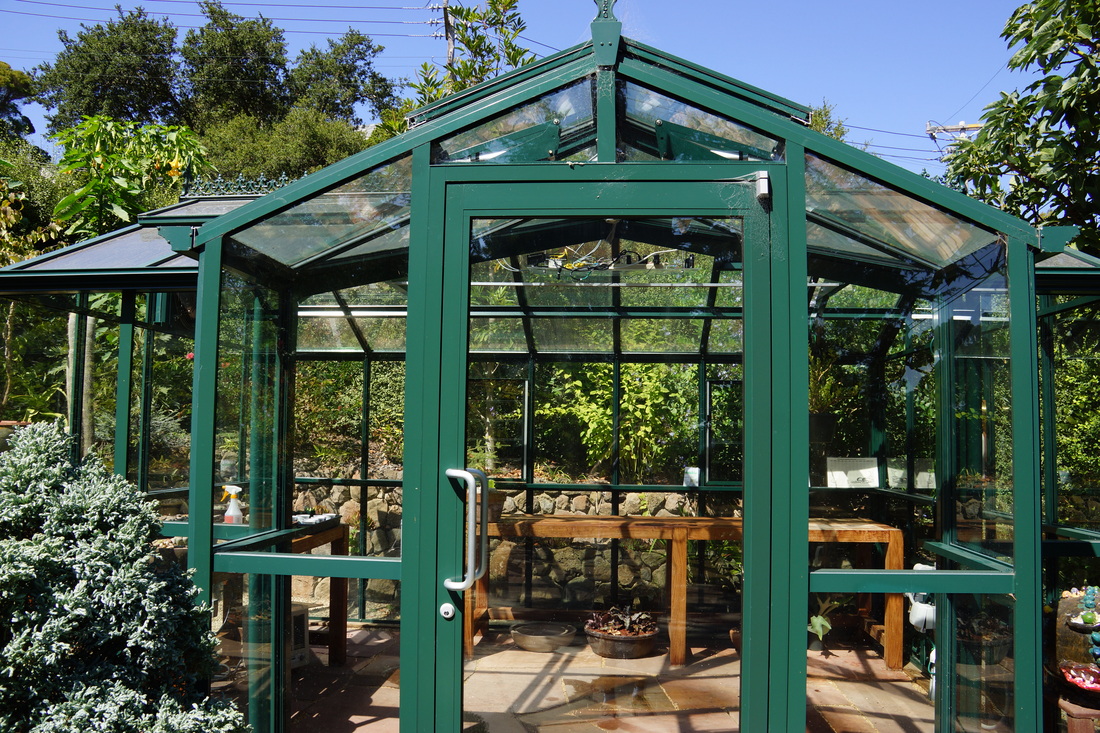
The completed project. My electronics are visible in the interior of the greenhouse, hanging from the roof. Rivnuts were used to make that possible -- they are my new favorite fasteners!
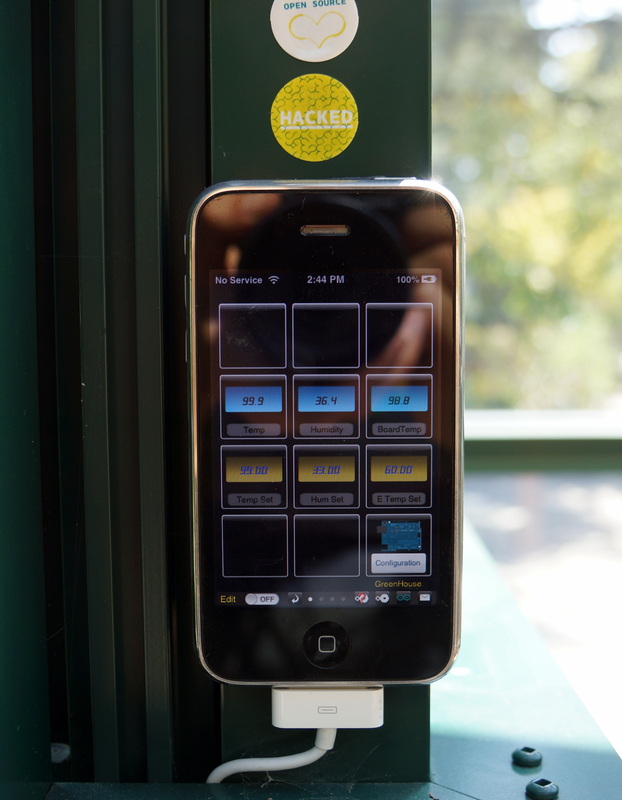
An old iPhone is used to control system set points (yellow) and view current conditions (blue), which are updated every second via an SHT15 board.
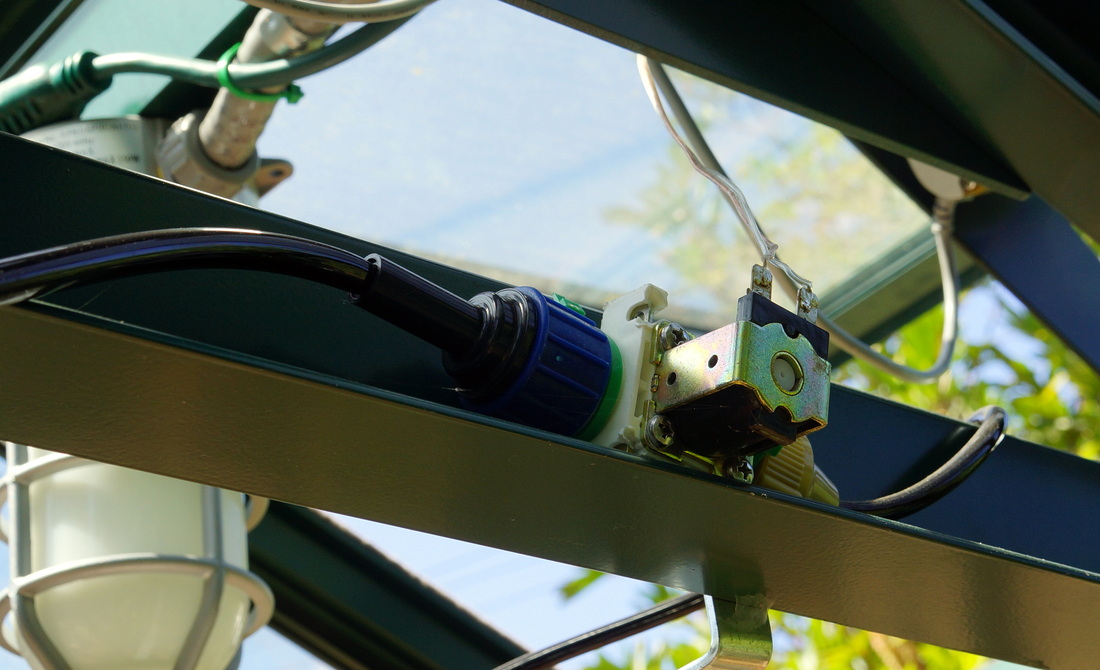
This cheap and simple 12V solenoid controls the water flow to my misting system, which is used to regulate the humidity within the greenhouse. When on, it dispenses about a third of a gallon of water per minute over 6 spray nozzles. A MOSFET connected to the Arduino controls the current to this device.
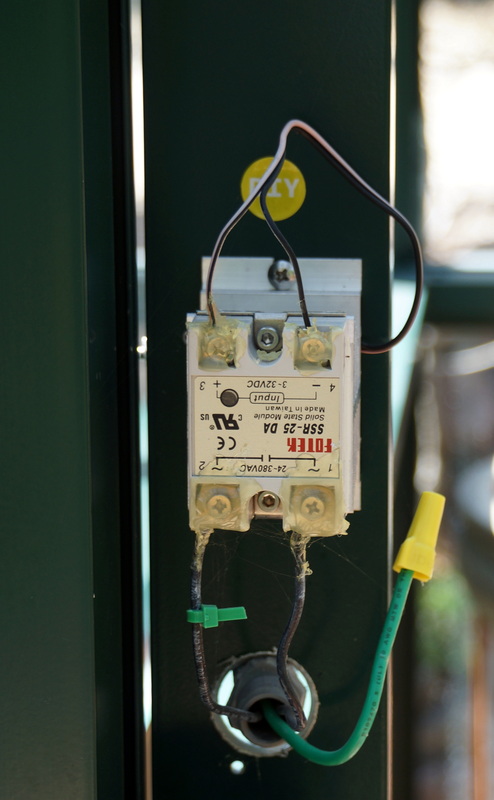
Solid state relays like this one were used to control the heating and blower fan functionality. Although the relay is rated for voltages low enough to be used directly with the Arduino controller board, I amplified the signal using a MOSFET to get it up to 12V -- definitely sufficient!
|
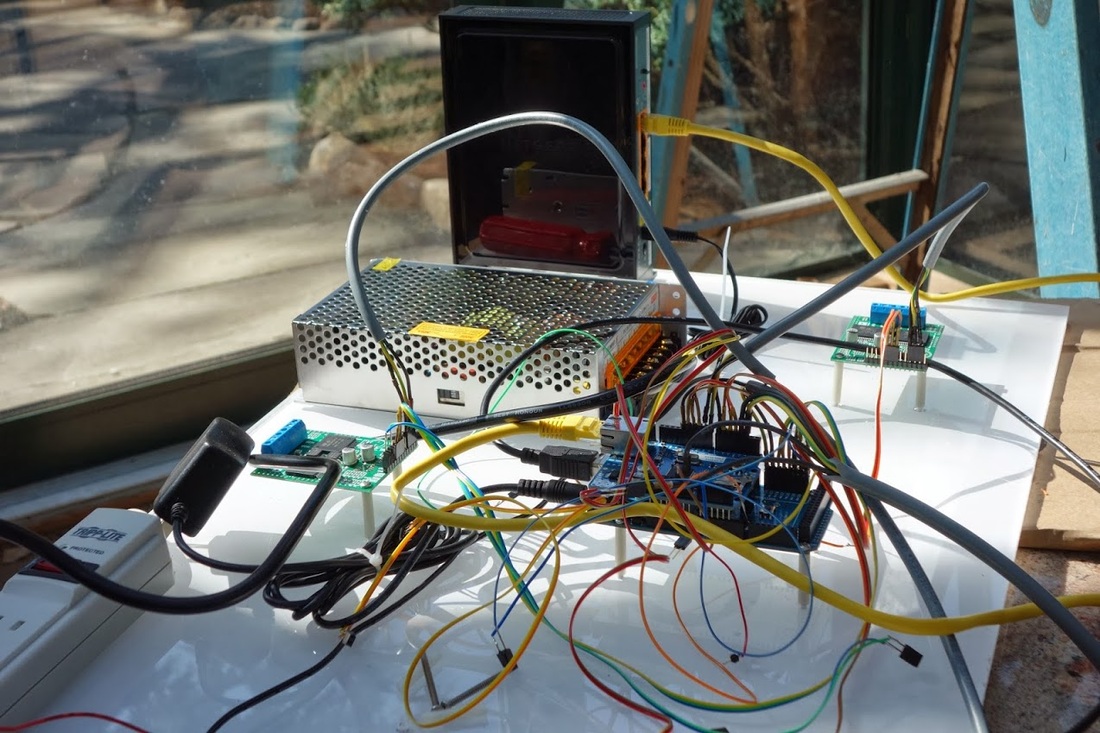
The belly of the beast. Don't worry -- I've since cleaned this mess up with zipties and better cable management. The power supply pictured here has also been replaced; about 2 months into operation it began making squealing noises and shortly thereafter let out the magic blue smoke.

In order to replace the stock window mechanisms (wax pistons) with electronically controlled linear actuators, I had to create some custom mounting hardware. I used 1.5" aluminum square stock and wrote up a quick CNC program to make the 6 identical pieces. I then tuned each actuator so that its bottom travel was limited by the internal limit switch, and the top travel extents are controlled by software (this part is not critical, so simply timing the duty cycle was sufficient). The actuators are driven by a Pololu motor boards, which are actuated one at a time in order to reduce the peak current draw imposed on the 12VDC power supply.
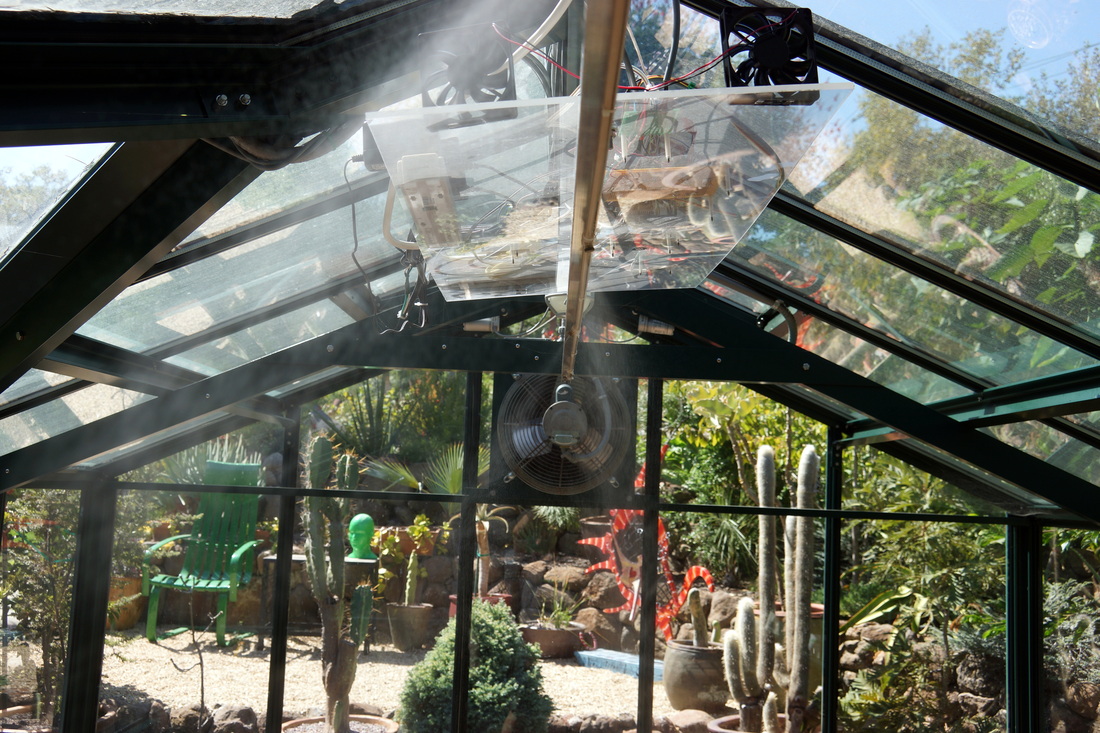
The misting system in action!
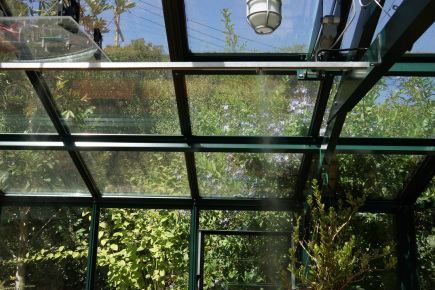
Another action shot
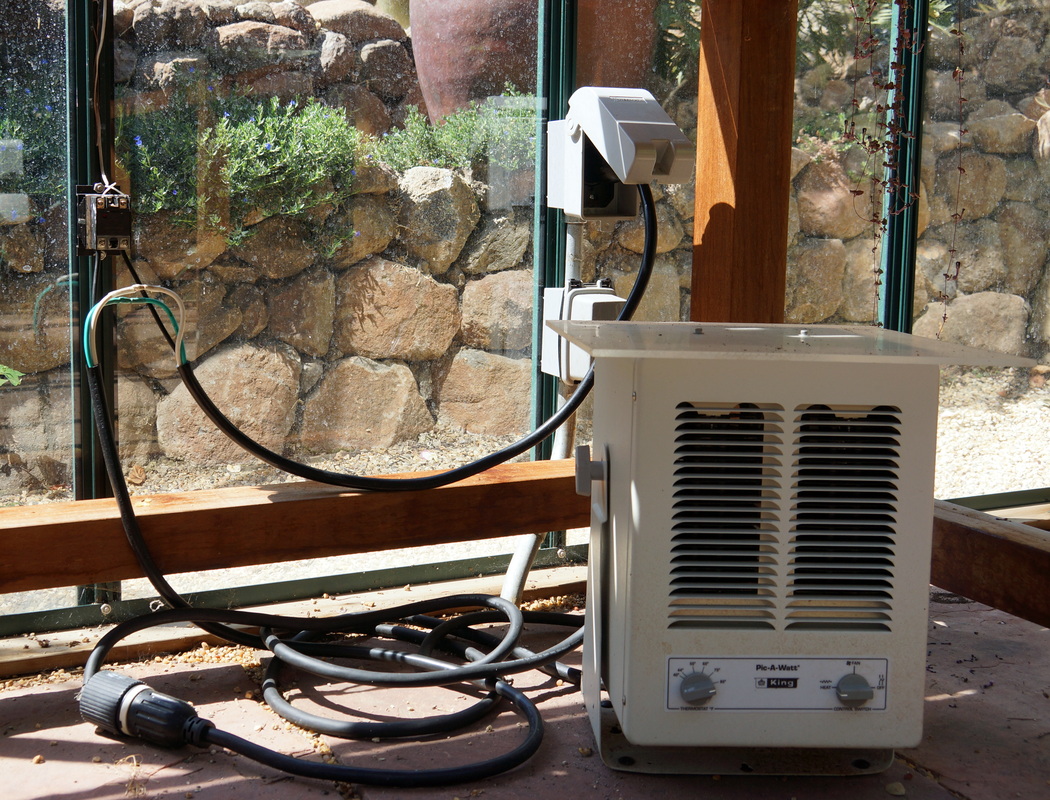
A 5kW heater makes quick work of keeping the greenhouse temperatures well above freezing in the event of an especially cold winter.
|